

Isn't there something significant in the UPI example for all of us to learn from and execute to enable world-scale success for our startups?, asks Ajit Balakrishnan.
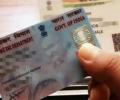
The Bombay high court has passed an ex-parte interim order restraining several entities from operating websites etc claiming to provide PAN card services on behalf of the government-owned UTI Infrastructure Technology and Services Limited (UTIITSL) and noted such an act poses a "national level threat". A single bench of Justice Bharati Dangre, in its order of January 12, said the Union government has made it mandatory for PAN card holders to link the same to their Aadhar Card, which is an acceptable proof of identification. Therefore, any potential misuse of the licence/ authorization to issue PAN cards would be highly detrimental not only to the interest of the company but also to national interest, the HC said.

The NCMC facilitates convenient travel while integrating last-mile connectivity, a must in India's extensive landscape. It enables travellers to pay for a cross-section of needs, including toll tax, retail shopping, and withdrawing money.

'Today, the State looks at everyone with suspicion.'

The Indian government has introduced a bill in the Lok Sabha to ban online games played with money, aiming to curb addiction, money laundering, and financial fraud. The bill also targets advertisements and financial transactions related to such games.

Red Square and VDNKh easily rank among the most striking places I've visited -- both for their historical significance and architectural splendour.
My admiration for Russian culture, vision and ambition grew with every step as I clocked the miles, Nitin Sathe tells us after a visit to Moscow and St Petersburg.

WhatsApp on Wednesday announced the expansion of its payments service in India to make it easier for people transacting with businesses to pay for purchases directly in the chat, with a choice of UPI apps, including rival digital payment options, as well as credit and debit cards. Meta founder and CEO Mark Zuckerberg asserted that India is leading the world in people and businesses embracing messaging. WhatsApp said it is working with partners Razorpay and PayU "to make paying for something as simple as sending a message", as the Meta-owned platform unveiled a host of new features to woo businesses in India's booming commerce market.

The Enforcement Directorate (ED) on Wednesday searched locations in Karnataka, including educational institutions linked to state Home Minister G Parameshwara, as part of a probe into alleged gold smuggling-linked money laundering case against Kannada actor Ranya Rao and others. The ED sources said an educational trust is suspected to have "diverted" funds and made a payment of Rs 40 lakh towards the credit card bill of Rao, allegedly on the instructions of an influential individual. The sources claimed the trust is linked to Parameshwara and the "influential" individual is a politically exposed person. The searches found there were no supporting vouchers or documentation to "substantiate" this payment (for credit card bill payment), they said.

To push digital transactions in rural and semi-urban areas, the Reserve Bank of India (RBI) on Monday issued a framework allowing offline payments up to Rs 200 per transaction, subject to an overall limit of Rs 2,000. An offline digital payment means a transaction that does not require internet or telecom connectivity. Under the offline mode, payments can be carried out face-to-face (proximity mode) using any channel or instrument like cards, wallets, and mobile devices.
The Reserve Bank of India's (RBI) new rules for credit and debit cards came into effect from October 1. These include tokenisation, one-time password (OTP) for activation after 30 days, written permission for enhancement of credit limit, and greater clarity on interest calculation.

In the Union Budget for Financial Year 2023-24 (FY24), Finance Minister Nirmala Sitharaman had held forth on the need for better governance and investor protection in the banking sector. She had proposed certain amendments to the Reserve Bank of India Act (RBI Act), 1934; the Banking Regulation Act (BR Act), 1949; and the Banking Companies (Acquisition and Transfer of Undertakings) Act, 1970.

State-owned banks have received guidance from the government to close Jan Dhan accounts whose beneficiaries are unwilling to keep them active, amid rising instances of such accounts being misused by fraudsters as mule accounts to defraud people, people aware of the development said.
A lowdown on the strings attached to such credit card schemes and when you should and should not opt for them.

Customers would be able to make money transfers, pay utility bills and recharge their mobile and DTH connections with just one click and a single PIN entry
The Credit Information Bureau (India) Limited (CIBIL)can now generate a copy of your credit history and payment default reports at the click of a mouse. Borrowers will now have to tidy up their payment history.

As many as 94 per cent of travel and tourism industry leaders consider AI to be critical to their business.

In a recent clarification, the Central Board of Indirect Taxes and Customs (CBIC) provided insights into the goods and services tax (GST) treatment of transactions involving vouchers. According to the CBIC, vouchers can be categorised into two types.

Tough times don't last, but tough people -- and smart financial strategies - do, says Ramalingam Kalirajan

To provide more choices to customers, the Reserve Bank of India has suggested mandating bank and non-bank card issuers to issue debt, credit and prepaid cards on more than one network. Customers can choose any one either at the time of issue of the card or anytime later, according to draft norms released by the Reserve Bank of India on Wednesday. The RBI said card issuers would also be barred from signing agreements that limit their ability to tie-up with other card-networks, according to the draft.

The RBI on Friday gave 15 days more till March 15, 2024 to Paytm Payments Bank Ltd (PPBL) to stop deposits, credit transactions or top-ups in any customer accounts, wallets, and FASTags, keeping in view the interest of customers, including merchants. As per a January 31 order of the central bank, PPBL was asked to stop further deposits, credit transactions, or top-ups in any customer accounts, prepaid instruments, wallets, FASTags, and National Common Mobility Cards, after February 29.
The central bank says interest on card balance should not be levied till next bill.
Harshala Chandorkar of CIBIL will answer your queries on how to read a credit report between 3 pm and 4 pm on Monday, August 19.
What if after making some hefty purchases at a store you pull out your credit card only to be told that your transaction has been declined?

Come October 1, merchants, payment aggregators and acquiring banks can no longer store the card details of customers.

Balance transfer is a facility in which you can transfer outstanding balance from one credit card to another. It works well if you have multiple cards.

Reliance Jio, India's biggest telecom operator, is planning to launch an initial public offering (IPO) and listing on bourses in the first half of 2026, billionaire Mukesh Ambani said on Friday. Jio is currently a unit of Reliance Industries Ltd, India's most valuable company.

SBI Cards & Payment Services reported mixed results for the January-March quarter (Q4) of FY24. While it managed to deliver strong earnings growth, it saw a perceptible decline in net interest margin (NIM) and suffered deteriorating asset quality. Taken together, the market was disappointed with the share dropping 3.5 per cent.

Traders in Karnataka are raising concerns over GST demand notices based on UPI transaction data. A tax official defends the action, stating it's within the law and recipients can respond with documentation.

There will be no charge for RuPay credit card use on Unified Payments Interface (UPI) for transactions up to Rs 2,000 in line with the RBI direction, a recent NPCI circular said. RuPay credit card has been operational for the last four years, and all major banks are enabled and are issuing incremental cards for both commercial and retail segments. "During credit card on-boarding on the apps, the device binding and UPI PIN setting process shall include and be construed as customer consent for credit card enablement for all types of transactions," the circular dated October 4 said.

Did you know that credit cards can in fact help you to improve and build your credit score if used responsibly and wisely!

rediffGURU T S Khurana answers readers' personal income tax queries.

An hour-long disruption could affect around 40 million UPI transactions.

Cracking down on repeated non-compliance of IT norms, the RBI on Wednesday barred Kotak Mahindra Bank from onboarding new customers through its online and mobile banking channels and issuing fresh credit cards with immediate effect after the regulator found "serious deficiencies" in the lender's IT risk management. These actions, the RBI said, are necessitated based on significant concerns arising out of Reserve Bank's IT examination of the bank for the years 2022 and 2023 and the continued failure on part of the bank to address these concerns in a comprehensive and timely manner.

In March this year, Worldline India launched Vabox (Voice Alert Box): merchants will now get instant audio alerts on the settlement of UPI (Unified Payments Interface) payments via QR codes in languages of their choice when customers check out. "They needn't worry whether the amount has been credited to their account," says Gulshan Pruthi, the firm's executive vice-president. The French payments giant will roll out 500,000 Vaboxes in the initial phase.

In 2024, the National Payments Corporation of India (NPCI) approved 20 third-party Unified Payments Interface (UPI) applications, a record since UPI's launch in 2016. This surge reflects growing interest from financial technology (fintech) companies, driven by the integration of credit products like UPI-linked credit cards and pre-approved credit lines.

Any defect identified by the expert would have to be rectified within one month, failing which compensation of 5,000 per day would be payable.

Targets should avoid panicking and hang up. 'Disconnecting stops the scammers from building psychological pressure.'

Banks have started charging customers for payment of credit card bills through cheque and so paying online makes more sense.

National Payments Corporation of India (NPCI) on Wednesday said there is no charge for the bank account to bank account-based UPI payments or normal UPI payments.
